Rome, Italy — Software Engineer / AI Engineer

Andrea
Barontini

Game Development Machine Learning Theoretical Physics PhD Leonardo S.P.A.

I build things at the intersection of deep theory and applied craft — from neural-network PDF fits at the LHC to indie games shipped on itch.io.

Scroll
01 —

Game Dev

02 —

Code Projects

03 —

Publications

— - 07
A Determination of a(s) at aN3LO_QCD x NLO_QED Accuracy from a Global PDF Analysis
arXiv:2506.13871 · 2025
Abstract

We present a determination of the strong coupling from a global dataset including both fixed-target and collider data from deep-inelastic scattering and a variety of hadronic processes, with a simultaneous determination of parton distribution functions (PDFs) based on the NNPDF4.0 methodology. This determination is performed at NNLO and approximate NLO (aNLO) perturbative QCD accuracy, including QED corrections and a photon PDF up to NLO accuracy. We extract using two independent methodologies, both of which take into account the cross-correlation between and the PDFs. The two methodologies are validated by closure tests that allow us to detect and remove or correct for several sources of bias, and lead to mutually consistent results. We account for all correlated experimental uncertainties, as well as correlated theoretical uncertainties related to missing higher order perturbative corrections (MHOUs). We study the perturbative convergence of our results and the impact of QED corrections. We assess individual sources of uncertainty, specifically MHOUs and the value of the top quark mass. We provide a detailed appraisal of methodological choices, including the choice of input dataset, the form of solution of evolution equation, the treatment of the experimental covariance matrix, and the details of Monte Carlo data generation. We find at aNLO accuracy, consistent with the latest PDG average and with recent lattice results

— - 06
Evaluating the faithfulness of PDF uncertainties in the presence of inconsistent data
arXiv:2503.17447 · 2025
Abstract

We critically assess the robustness of uncertainties on parton distribution functions (PDFs) determined using neural networks from global sets of experimental data collected from multiple experiments. We view the determination of PDFs as an inverse problem, and we study the way the neural network model tackles it when inconsistencies between input datasets are present. We use a closure test approach, in which the regression model is applied to artificial data produced from a known underlying truth, to which the output of the model can be compared and its accuracy can be assessed in a statistically reliable way. We explore various phenomenologically relevant scenarios in which inconsistencies arise due to incorrect estimation of correlated systematic uncertainties. We show that the neural network generally corrects for the inconsistency except in cases of extreme uncertainty underestimation. When the inconsistency is not corrected, we propose and validate a procedure to detect inconsistencies.

— - 06
An FONLL prescription with coexisting flavor number PDFs
arXiv:2408.07383 · 2024
Abstract

We present a new prescription to account for heavy quark mass effects in the determination of parton distribution functions (PDFs) based on the FONLL scheme. Our prescription makes explicit use of the freedom to choose the number of active flavors at a given scale and, thus, use coexisting PDFs with different active flavor number. This new prescription is perturbatively equivalent to the former but improves the implementation in two ways. First, it can be naturally generalized to account simultaneously for multiple heavy quark effects, such as charm and bottom effects, which can both be relevant at the same scale due to the small mass difference. Second, it can be trivially generalized to use at any fixed-order or collinear resummed accuracy, while previous prescriptions required ad-hoc expansions of the DGLAP evolution kernels for each coefficient. We supplement the paper with codes for the computation of deep inelastic scattering observables in this new prescription.

— - 05
NNPDF4.0 aNLO PDFs with QED corrections
arXiv:2406.01779 · 2024
Abstract

We review recent progress in the global determination of the collinear parton distributions (PDFs) of the proton within the NNPDF framework. This progress includes NNPDF4.0 variants with QED effects and with missing higher order uncertainties (MHOUs) via the theory covariance matrix formalism, as well as PDFs based on QCD calculations at approximate NLO (aNLO) accuracy. We present the combination of these theoretical developments resulting into NNPDF4.0 aNLO variants accounting for QED corrections and with a photon PDF. We compare these aNLO QED PDFs with analogous results obtained by the MSHT group, and briefly quantify their implications at the level of representative LHC cross-sections.

— - 04
The Path to N³LO Parton Distributions
arXiv:2402.18635 · 2024
Abstract

We extend the existing leading (LO), next-to-leading (NLO), and next-to-next-to-leading order (NNLO) NNPDF4.0 sets of parton distribution functions (PDFs) to approximate next-to-next-to-next-to-leading order (aNLO). We construct an approximation to the NLO splitting functions that includes all available partial information from both fixed-order computations and from small and large resummation, and estimate the uncertainty on this approximation by varying the set of basis functions used to construct the approximation. We include known NLO corrections to deep-inelastic scattering structure functions and extend the FONLL general-mass scheme to accuracy. We determine a set of aNLO PDFs by accounting both for the uncertainty on splitting functions due to the incomplete knowledge of NLO terms, and to the uncertainty related to missing higher corrections (MHOU), estimated by scale variation, through a theory covariance matrix formalism. We assess the perturbative stability of the resulting PDFs, we study the impact of MHOUs on them, and we compare our results to the aNLO PDFs from the MSHT group. We examine the phenomenological impact of aNLO corrections on parton luminosities at the LHC, and give a first assessment of the impact of aNLO PDFs on the Higgs and Drell-Yan total production cross-sections. We find that the aNLO NNPDF4.0 PDFs are consistent within uncertainties with their NNLO counterparts, that they improve the description of the global dataset and the perturbative convergence of Higgs and Drell-Yan cross-sections, and that MHOUs on PDFs decrease substantially with the increase of perturbative order.

— - 03
Determination of the theory uncertainties from missing higher orders on NNLO parton distributions with percent accuracy
arXiv:2401.10319 · 2024
Abstract

We include uncertainties due to missing higher order corrections to QCD computations (MHOU) used in the determination of parton distributions (PDFs) in the recent NNPDF4.0 set of PDFs. We use our previously published methodology, based on the treatment of MHOUs and their full correlations through a theory covariance matrix determined by scale variation, now fully incorporated in the new NNPDF theory pipeline. We assess the impact of the inclusion of MHOUs on the NNPDF4.0 central values and uncertainties, and specifically show that they lead to improved consistency of the PDF determination with an ensuing moderate reduction of PDF uncertainties at NNLO.

— - 02
Photons in the proton: implications for the LHC
arXiv:2401.08749 · 2024
Abstract

We construct a set of parton distribution functions (PDFs), based on the recent NNPDF4.0 PDF set, that also include a photon PDF. The photon PDF is constructed using the LuxQED formalism, while QED evolution accounting for O(alpha), O(alpha alphas) and O(alpha^2) corrections is implemented and benchmarked by means of the EKO code. We investigate the impact of QED effects on NNPDF4.0, and compare our results both to our previous NNPDF3.1QED PDF set and to other recent PDF sets that include the photon. We assess the impact of photon-initiated processes and electroweak corrections on a variety of representative LHC processes, and find that they can reach the 5% level in vector boson pair production at large invariant mass.

— - 01
Pineline: Industrialization of High-Energy Theory Predictions
arXiv:2302.12124 · 2023
Abstract

We present a collection of tools automating the efficient computation of large sets of theory predictions for high-energy physics. Calculating predictions for different processes often require dedicated programs. These programs, however, accept inputs and produce outputs that are usually very different from each other. The industrialization of theory predictions is achieved by a framework which harmonizes inputs (runcard, parameter settings), standardizes outputs (in the form of grids), produces reusable intermediate objects, and carefully tracks all meta data required to reproduce the computation. Parameter searches and fitting of non-perturbative objects are exemplary use cases that require a full or partial re-computation of theory predictions and will thus benefit of such a toolset. As an example application we present a study of the impact of replacing NNLO QCD K-factors in a PDF fit with the exact NNLO predictions.

04 —

About

I am a Software engineer with a Ph.D. in Theoretical Physics, during which I conducted research on neural networks as part of the NNPDF Collaboration. My background combines scientific research, machine learning, and software engineering.

I currently work as a Software Engineer at Leonardo S.p.A., where I primarily focus on backend development in Python. I also lead a small development team on a full-stack project, contributing across both backend and frontend components while driving technical delivery and collaboration.

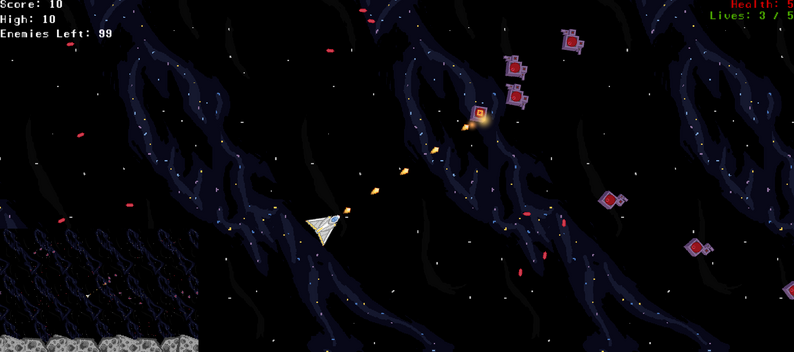
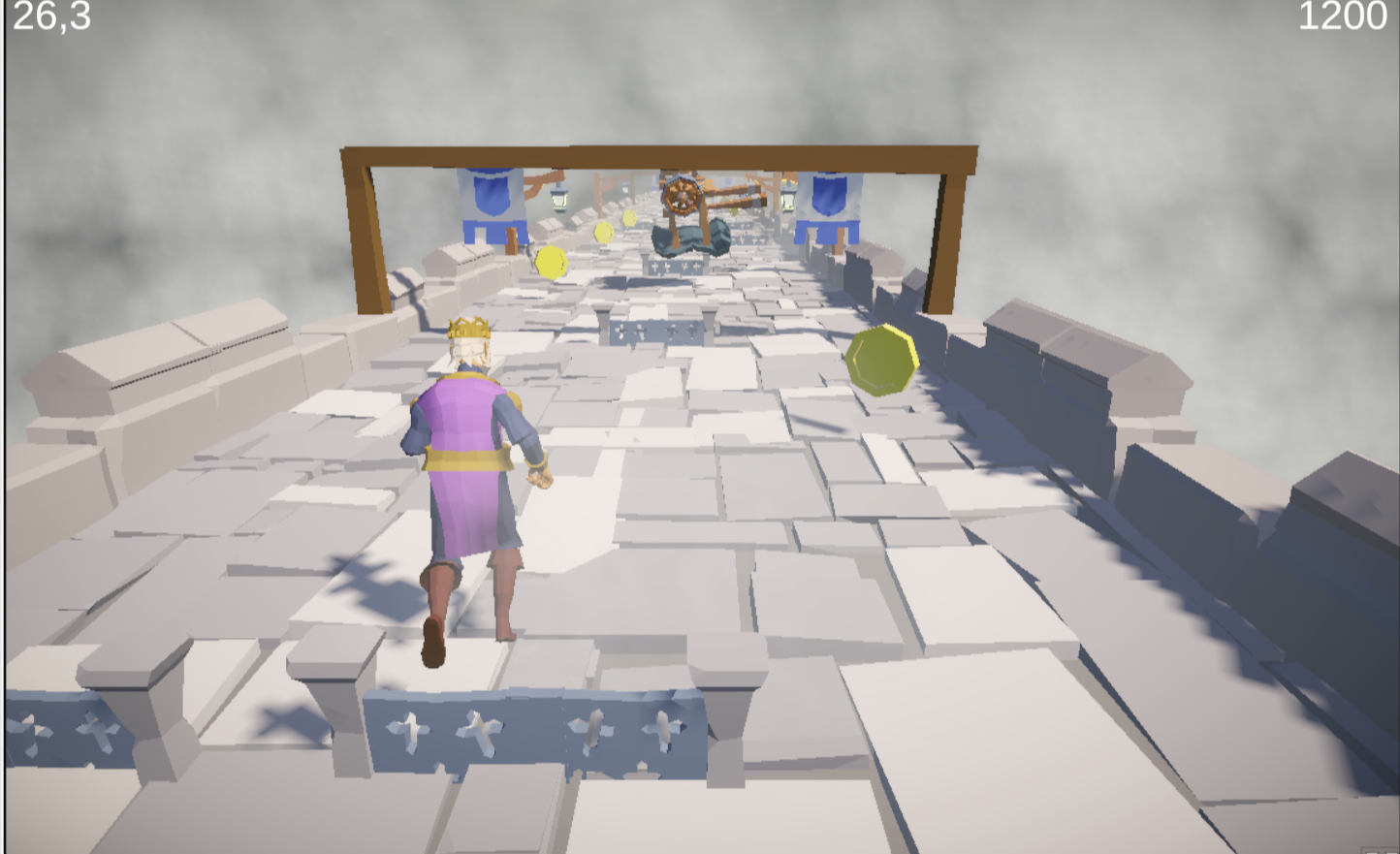
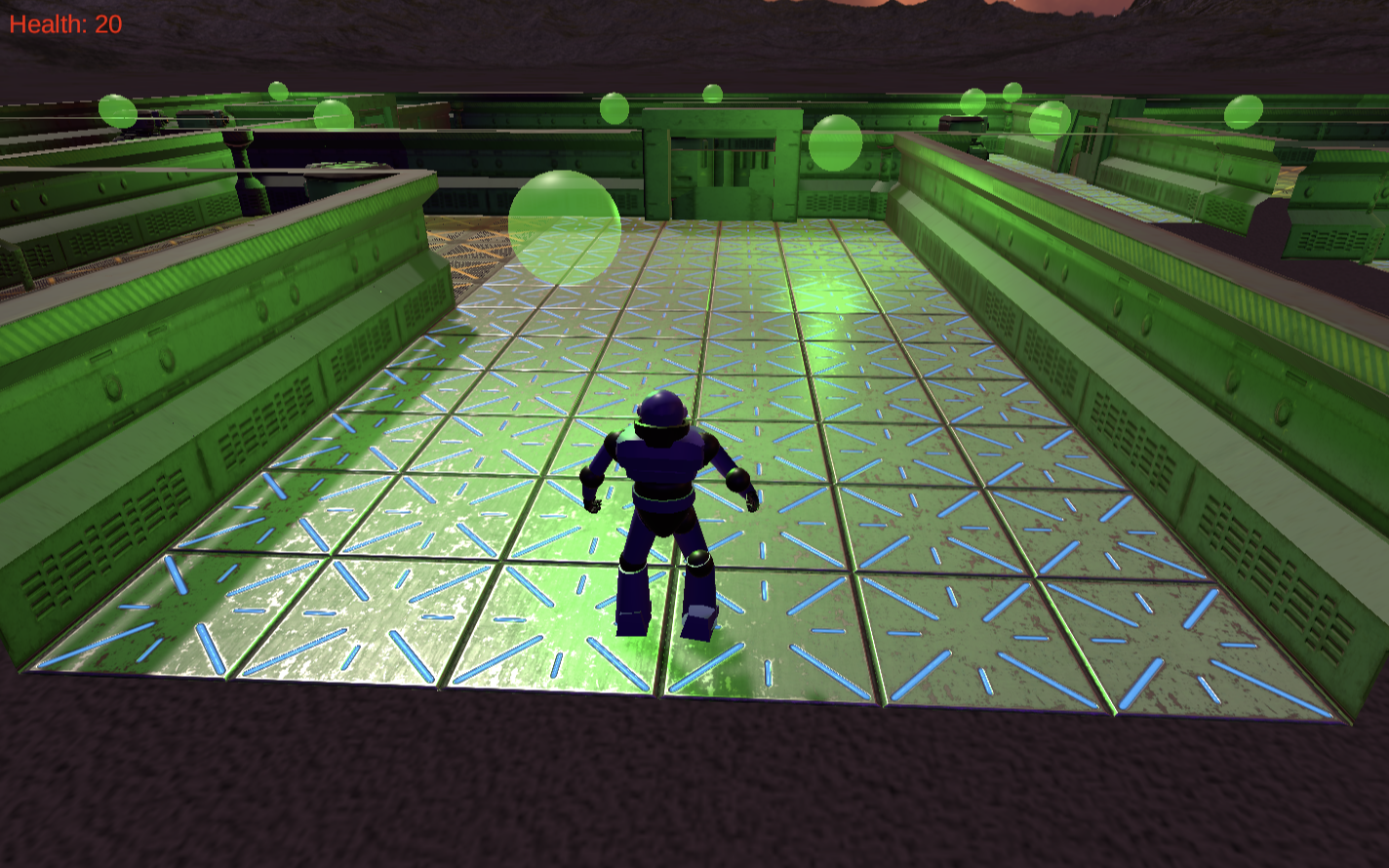
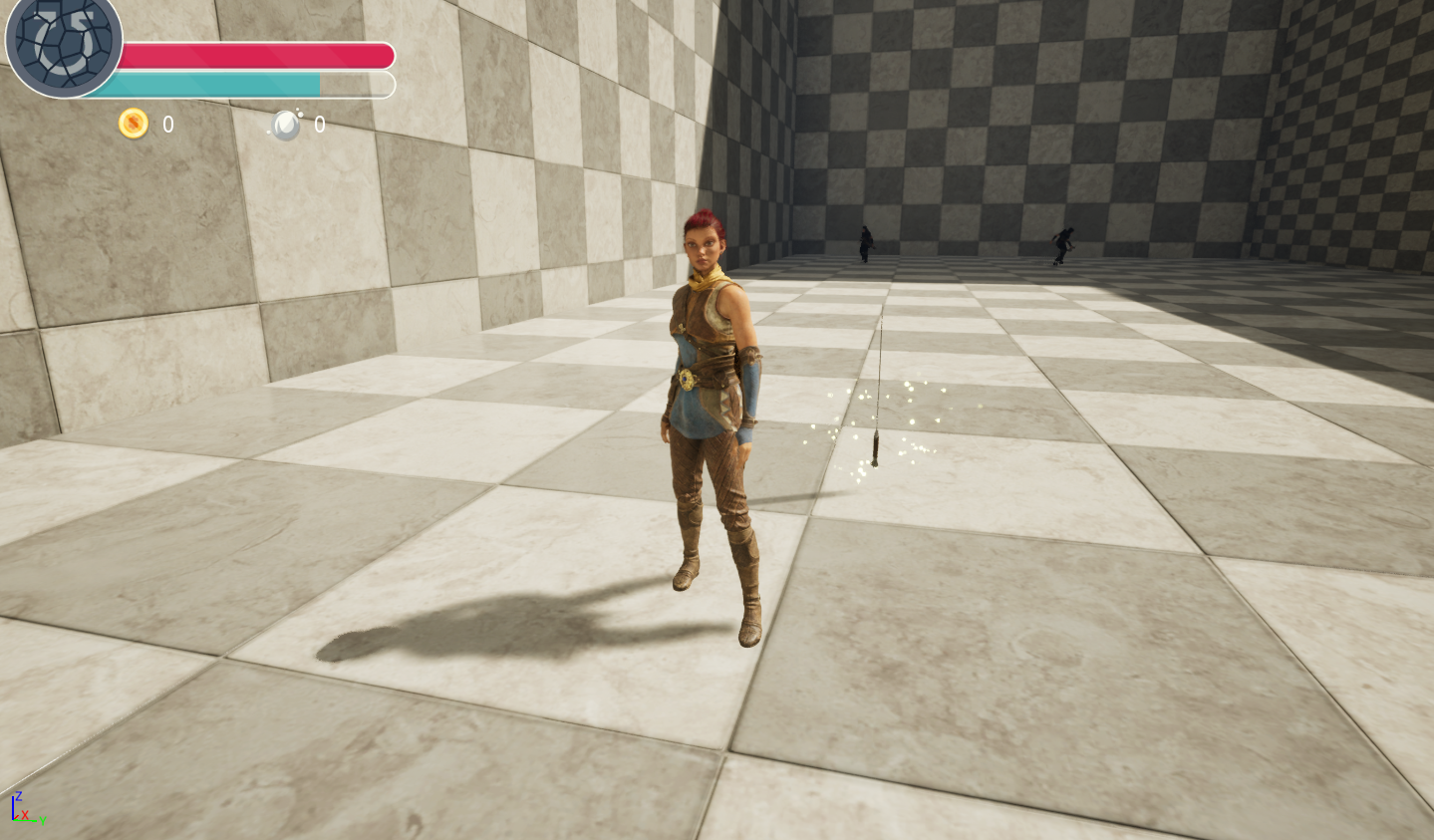
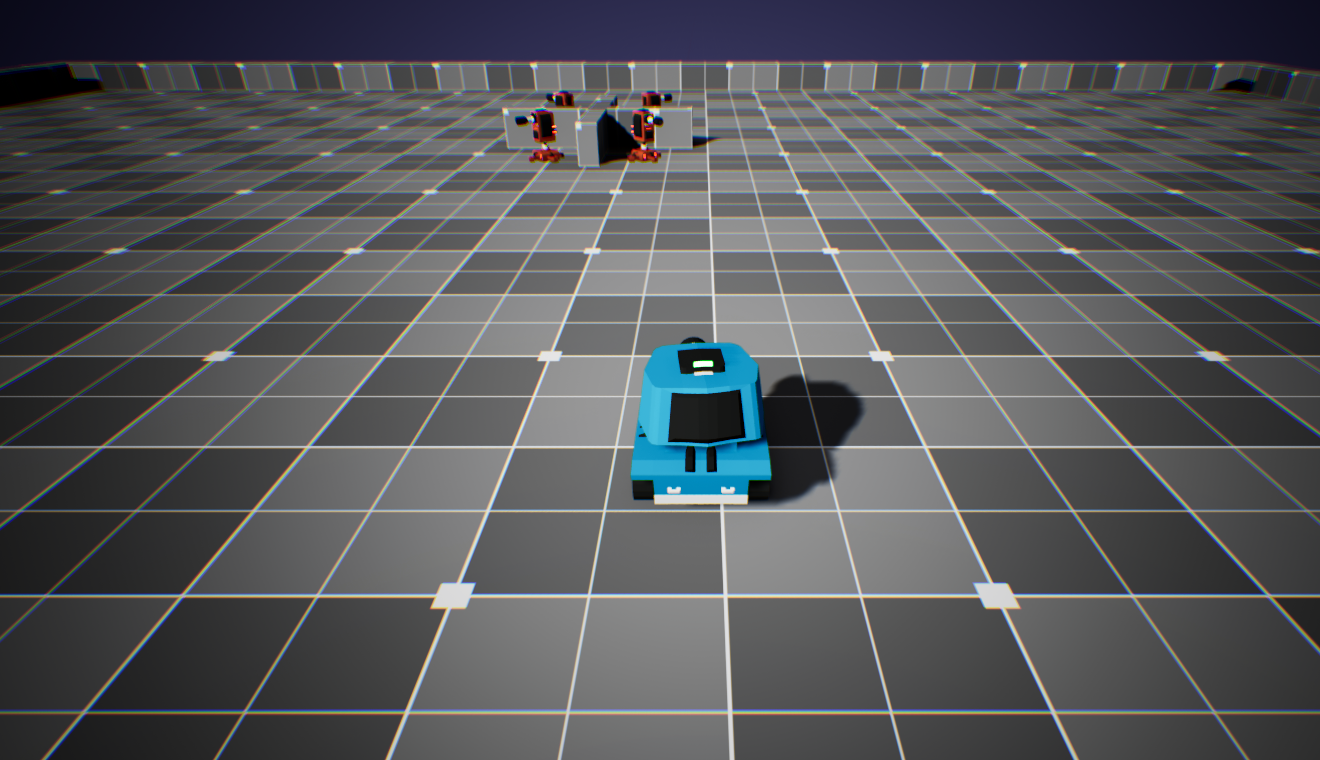
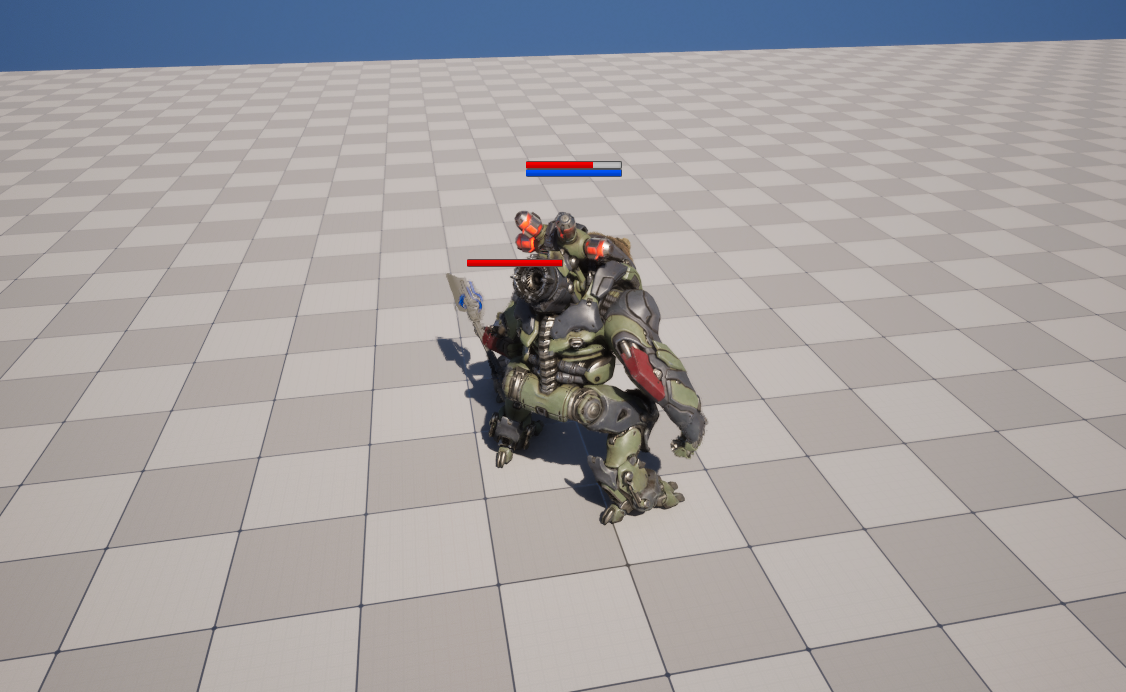
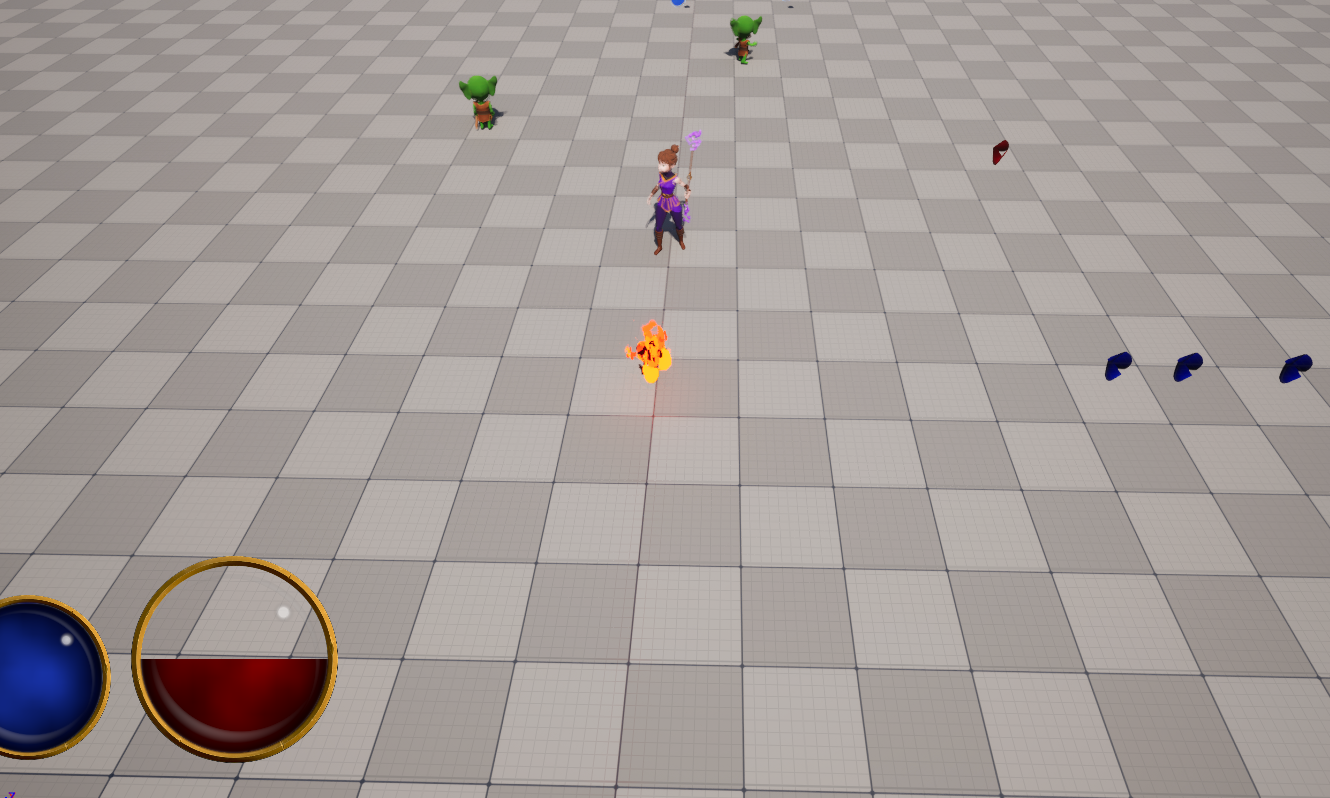
Outside of my professional work, I am passionate about game development. I have completed numerous courses covering topics from game programming fundamentals to advanced development techniques, and I actively develop personal projects using both Unity and Unreal Engine. Through these projects, I continue to expand my skills in software architecture, gameplay programming, and interactive experiences.

Physics & Math
QFT QCD PDF fitting Advanced modeling Advanced linear algebra
Code
Python C# C++ NumPy TensorFlow DesignPatterns LaTeX
Game Dev
Unity 3D / 2D Unreal Engine Game Design
Tools
Git Github Workflows JetBrains Rider Visual Studio
10+
Papers published
15+
Talks & seminars
8+
Games developed
3
Theses supervised
Currently
Python Software Engineer
, Leonardo SpA · Rome · 2024 – present
Contact
andreabarontini97@gmail.com ↗